


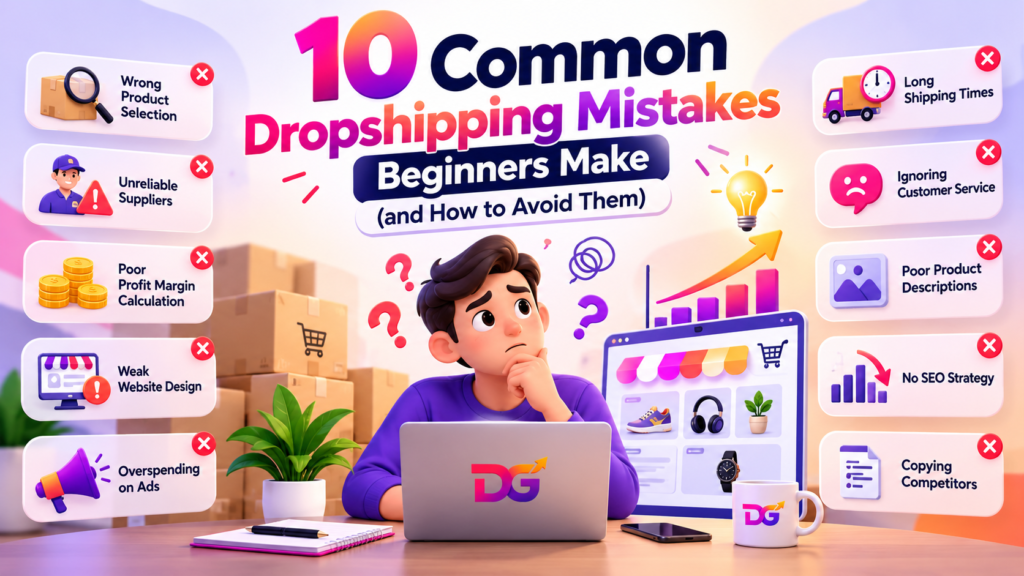
10 Common Dropshipping Mistakes Beginners Make (and How to Avoid Them)
Starting a dropshipping business can be an attractive way to enter e-commerce without purchasing large quantities of inventory upfront. You can sell products through an online store while your suppliers handle storage, packaging, and shipping. However, a low barrier to entry does not mean the business is easy to run profitably.
Many beginners spend money on advertisements before understanding their customers, select unreliable suppliers, copy product descriptions, or price their products without calculating all expenses. These decisions can lead to disappointing sales, unhappy customers, and unnecessary losses.
Understanding common dropshipping mistakes before launching your store can help you avoid expensive problems and build a more reliable business. You do not need a perfect strategy on your first day, but you do need a clear plan, realistic expectations, and a willingness to learn from actual results.
This guide explains 10 common dropshipping mistakes beginners make, why they happen, and how to avoid them. You will also learn how to choose products, work with suppliers, calculate profit margins, market your store, and improve customer satisfaction.
What Is Dropshipping and Why Do Beginners Struggle?
Dropshipping is an e-commerce model in which a retailer sells products without keeping them in its own inventory. When a customer places an order, the retailer forwards the order details to a supplier, who prepares and ships the product to the customer.
The retailer remains responsible for the online store, pricing, marketing, customer communication, and overall shopping experience.
This model reduces the need to purchase inventory before making sales, but it introduces other challenges. You may have less control over product quality, shipping speed, stock availability, and packaging.
Many beginners underestimate these responsibilities. They assume that connecting a supplier to a website is enough to create a successful business.
That misunderstanding leads to several avoidable dropshipping mistakes.
A sustainable business requires product research, accurate pricing, reliable suppliers, useful content, and customer support. Understanding these fundamentals before investing heavily can improve your chances of building a profitable store.
1. Choosing Products Without Proper Research
One of the most common dropshipping mistakes is choosing a product simply because it is trending on social media.
A viral video can create attention, but attention does not guarantee consistent demand or profitable sales. A product may attract thousands of views while generating very few purchases.
Some beginners also select products because another seller claims to be making substantial revenue. They copy the product without checking competition, supplier costs, shipping times, or customer complaints.
How to avoid this mistake
Research a product before adding it to your store.
Check Google Trends, marketplace listings, customer reviews, competitor websites, and social media discussions. Look for evidence that people want the product and understand why they would purchase it.
Ask yourself:
- Does the product solve a clear problem?
- Is there evidence of customer demand?
- Can I compete with existing sellers?
- Is the product easy to demonstrate?
- Are reliable suppliers available?
- Can I make a reasonable profit after all expenses?
Avoid selecting products based on excitement alone.
The goal is not necessarily to discover a completely new product. Sometimes, a familiar product with better positioning, useful bundles, stronger product descriptions, or improved customer service can offer a better opportunity.
2. Working With Unreliable Suppliers
A supplier can make or break your dropshipping business.
Some beginners choose suppliers exclusively because they offer the lowest prices. They ignore product quality, communication, inventory availability, and delivery performance.
This is one of the most expensive dropshipping mistakes because customers usually blame the store they purchased from, not the supplier responsible for shipping the order.
Imagine a customer ordering a product for a special occasion. The supplier ships it late, provides incorrect tracking information, or sends a damaged item. Even if you did not cause the problem directly, you still have to manage the complaint.
How to avoid this mistake
Evaluate suppliers carefully before committing to them.
Check supplier reviews, shipping estimates, return procedures, product specifications, and communication speed. Ask questions about stock availability and what happens when an item is damaged or unavailable.
Whenever practical, order product samples before selling an item. Inspect the actual quality, packaging, and delivery experience.
You can also read Shopify’s official dropshipping guide to understand different supplier arrangements and fulfillment options.
Do not rely entirely on one supplier for your most important products if suitable alternatives exist.
Reliable suppliers may cost slightly more, but fewer complaints, replacements, and refunds can make the relationship more valuable over time.
3. Ignoring the Real Cost of Running a Business
Another major problem is confusing revenue with profit.
Suppose you sell a product for ₹1,000. Your supplier charges ₹400, and shipping costs ₹100. At first glance, you may think you have earned ₹500.
However, you may still need to account for advertising, payment processing, platform fees, refunds, taxes, and other operating expenses.
After including those costs, your actual profit could be much smaller than expected.
Failing to calculate these expenses is among the most damaging dropshipping mistakes, especially for beginners operating with limited capital.
How to avoid this mistake
Calculate the full cost of fulfilling an order before deciding your selling price.
For example:
| Expense | Amount |
|---|---|
| Selling price | ₹1,000 |
| Product cost | ₹400 |
| Shipping | ₹100 |
| Payment and platform expenses | ₹50 |
| Advertising cost per order | ₹200 |
| Estimated contribution before other expenses | ₹250 |
In this example, ₹250 remains before any additional overheads, applicable taxes not already accounted for, refunds, and other business costs.
Your actual results will depend on your store and business model.
Calculate your break-even point, monitor advertising costs, and review your margins regularly. A product that generates many orders may still be unprofitable if the cost of acquiring customers is too high.
4. Copying Competitors Instead of Building a Brand
Looking at competitors is useful. Copying everything they do is not.
Some beginners use identical product descriptions, supplier images, store layouts, and promotional messages. Their websites end up looking almost exactly like dozens of other stores.
Customers then have little reason to choose one seller over another, so price becomes the main point of comparison.
This is one of the dropshipping mistakes that makes it difficult to establish customer trust and long-term brand recognition.
How to avoid this mistake
Create a clear identity for your store.
Choose a specific audience, develop a consistent visual style, and explain your products in your own words. Use original product photography or create useful demonstrations whenever possible.
For example, instead of operating a general store selling unrelated products, you could focus on desk accessories for students and remote workers.
That positioning makes it easier to develop relevant content, choose complementary products, and communicate with a defined audience.
You do not need an expensive branding project. A clear store name, consistent design, helpful product pages, and reliable service are good starting points.
5. Building a Poorly Designed Online Store
Your website is where visitors decide whether they trust your business enough to make a purchase.
A confusing navigation menu, low-quality images, slow-loading pages, broken buttons, or an unclear checkout process can discourage customers.
Some beginners spend most of their time finding products but launch their stores without testing the shopping experience.
These dropshipping mistakes can waste the money spent attracting visitors because even interested shoppers may struggle to complete their purchases.
How to avoid this mistake
Build a store that is easy to understand and use.
Make sure your website includes:
- Clear product categories
- Accurate product descriptions
- High-quality images
- Visible prices and shipping information
- Mobile-friendly layouts
- Secure checkout
- Contact information
- Return and refund policies
- Privacy policy and terms
- A simple navigation menu
Test the entire buying journey on a smartphone as well as a desktop computer.
Google’s e-commerce website guidelines explain important steps for making an online store accessible to Google Search.
A professional website does not guarantee sales, but a confusing website can create unnecessary barriers between visitors and purchases.
6. Spending Too Much Money on Advertising Too Early
Paid advertising can help a new store reach potential customers, but launching campaigns without proper preparation can become expensive.
Some beginners spend heavily on advertisements before confirming product demand, testing the website, or calculating their break-even customer acquisition cost.
When sales do not arrive immediately, they increase spending or keep running the same campaign without understanding the problem.
This is among the dropshipping mistakes that can drain a limited budget before the business has enough information to make good decisions.
How to avoid this mistake
Start with a controlled testing budget.
Before launching advertisements, confirm that your product pages work, your checkout is functional, your prices are competitive, and your delivery information is clear.
Test a small number of product angles and advertising messages. Track clicks, add-to-cart events, completed purchases, and the cost of acquiring each customer.
If people click your advertisements but do not add products to their carts, investigate the product page, price, and offer.
If people add products but do not purchase, examine shipping costs, payment options, and checkout usability.
Do not increase spending simply because a campaign receives impressions or clicks. Increase the budget only when the results provide a reasonable basis for doing so.
7. Ignoring Shipping Times and Delivery Expectations
Customers want to know when their orders will arrive.
A store may advertise an attractive product at a competitive price, but unclear shipping information can create hesitation. Long delivery times can also lead to complaints when customers expect their products sooner.
Some sellers hide delivery estimates or use unrealistic promises to encourage purchases.
These dropshipping mistakes may generate orders initially, but they can damage trust and increase refund requests.
How to avoid this mistake
Confirm shipping estimates with your supplier before publishing them.
Clearly explain:
- Estimated processing time
- Estimated delivery time
- Available delivery locations
- Shipping charges
- Tracking availability
- Possible delays
- How customers can contact support
Do not promise delivery within three days unless your supplier and shipping arrangement can realistically support that estimate.
Your shipping strategy should also reflect the products you sell and the expectations of your target audience.
Shopify’s dropshipping shipping strategies guide explains different ways businesses can manage shipping costs.
Accurate expectations are better than unrealistic promises that create problems after the sale.
8. Neglecting Customer Service
In dropshipping, the supplier handles fulfillment, but the customer usually contacts your store when something goes wrong.
Customers may ask about delivery, request a return, report a damaged product, or need help understanding how an item works.
Some beginners respond slowly or assume that the supplier should handle every complaint.
This is one of the dropshipping mistakes that can damage a store’s reputation even when the product itself is good.
How to avoid this mistake
Create a simple customer support process before launching.
Set up a professional contact email, prepare answers to common questions, and establish a realistic response time.
Provide order confirmation and tracking information when available. If a shipment is delayed, communicate honestly rather than waiting for the customer to complain.
When an order arrives damaged or incorrect, investigate the issue and explain the next steps clearly.
You should also understand your supplier’s return and replacement procedures before accepting orders.
Good customer service does not mean every problem can be solved instantly. It means customers know that someone is taking responsibility for resolving it.
9. Using Poor Product Descriptions and Images
Customers cannot physically inspect products before buying them online.
They rely on product images, specifications, descriptions, reviews, and delivery information to make decisions.
Some beginners import supplier listings without checking the wording, correcting errors, or confirming that the images accurately represent the product.
This creates another set of dropshipping mistakes because unclear descriptions can lead to lower conversions and disappointed customers.
How to avoid this mistake
Write product descriptions around the customer’s needs.
Explain what the product does, who it is suitable for, how to use it, and what makes it useful.
Include accurate dimensions, materials, compatibility information, and other specifications relevant to the product.
Use clear images showing different angles and important details. If possible, create original demonstrations that show the product being used in a realistic setting.
Avoid unsupported claims such as guaranteed results or benefits that the product cannot deliver.
You should also avoid publishing descriptions that promise features your supplier does not provide.
Accurate information helps customers make informed decisions and reduces the chance of returns caused by misunderstandings.
10. Ignoring SEO and Relying Only on Social Media
Social media can help a new store reach potential customers, but relying on a single traffic source creates risk.
Platform algorithms change, advertising costs fluctuate, and audience engagement can vary.
Some beginners focus entirely on paid promotion and ignore search engine optimization. Others publish large amounts of low-quality content without understanding what their customers actually search for.
Both approaches can limit long-term growth.
Ignoring organic search is one of the dropshipping mistakes that can make customer acquisition more dependent on continuous advertising spend.
How to avoid this mistake
Build an SEO strategy around the products and questions relevant to your audience.
Start with keyword research. Optimize category pages, product titles, descriptions, and important store pages.
Publish helpful articles that answer real customer questions. For example, a store selling workspace accessories could create guides about choosing a laptop stand, organizing cables, or setting up a compact desk.
Use descriptive internal links to connect related articles and product categories.
Make sure search engines can discover your important pages and that your website works well on mobile devices.
SEO takes time, so do not expect immediate rankings. However, useful content and well-structured pages can support long-term organic discovery.
How to Avoid Dropshipping Mistakes Before Launching
You do not need to wait until problems appear to start improving your business.
Create a launch checklist and review it before accepting your first order.
Validate your product
Research demand, competition, customer reviews, supplier quality, and shipping costs.
Test your supplier
Check communication, product specifications, delivery estimates, and return procedures. Order samples when practical.
Calculate your margins
Include product costs, shipping, advertising, payment fees, platform costs, and other expenses.
Test your website
Check mobile usability, checkout, payment processing, contact information, and order confirmation.
Prepare customer support
Write clear shipping, return, refund, and contact information. Establish a process for handling complaints.
Start marketing carefully
Use a manageable budget, track conversions, and review the quality of the traffic you attract.
Taking these steps will not eliminate every problem, but it can prevent many common dropshipping mistakes before they become expensive.
How DigiBrandUp Can Help You Build a Better Online Store
A successful dropshipping business requires more than a list of products and a supplier connection.
Your store also needs a clear structure, useful product pages, search visibility, effective marketing, and a reliable customer experience.
DigiBrandUp provides services related to web development, e-commerce, SEO, digital marketing, and dropshipping.
You can explore DigiBrandUp’s services to understand how professional support may help with website development and online business growth.
For more information about e-commerce, websites, SEO, and digital marketing, visit the DigiBrandUp Blog.
The right approach is to build a solid foundation, test your assumptions, and improve the store using real customer and sales data.
Frequently Asked Questions
What are the most common dropshipping mistakes beginners make?
The most common dropshipping mistakes include choosing products without research, working with unreliable suppliers, ignoring profit margins, copying competitors, building a poor website, overspending on advertising, hiding shipping delays, neglecting customer service, writing weak product descriptions, and ignoring SEO. Avoiding these dropshipping mistakes can help beginners build a more reliable online business.
Can dropshipping be profitable for beginners?
Dropshipping can be profitable, but results depend on product demand, supplier reliability, pricing, advertising costs, conversion rates, and customer satisfaction. Avoiding common dropshipping mistakes, such as poor pricing and ineffective marketing, can help you make better business decisions. However, dropshipping is not a guaranteed way to make money.
How much money do I need to start dropshipping?
The required budget varies depending on the e-commerce platform, domain, supplier arrangements, product samples, marketing, and operating expenses. Even without purchasing inventory upfront, you need enough money to run the business and manage orders. Planning your budget carefully can help prevent dropshipping mistakes related to overspending and cash flow.
Should I test a product before selling it?
Yes. Ordering a sample when practical allows you to inspect product quality, packaging, and delivery experience before customers receive the item. Product testing also helps you avoid dropshipping mistakes caused by poor-quality products, misleading descriptions, and unreliable suppliers.
Is paid advertising necessary for dropshipping?
No. Paid advertising is one option for attracting customers. You can also use SEO, social media content, email marketing, partnerships, and other channels. Choosing the right marketing mix for your audience and budget can help you avoid dropshipping mistakes such as spending too much on ads without generating sales.
How can I avoid losing money on dropshipping?
Calculate all costs before setting prices, test products and suppliers, control advertising spending, monitor conversion rates, and review your profit margins regularly. Tracking these factors helps you identify potential problems early and avoid costly dropshipping mistakes.
Why is customer service important in dropshipping?
Customers contact your store when they need help with orders, delivery, returns, or damaged products. Reliable support helps resolve problems, improves the customer experience, and protects customer trust. Neglecting support is one of the dropshipping mistakes that can damage your store’s reputation.
How long does it take to build a successful dropshipping store?
There is no fixed timeline. It depends on product selection, marketing, supplier performance, competition, available resources, and how effectively you improve the business. Learning from your results and correcting dropshipping mistakes can help you build a more sustainable store over time.
Final Thoughts
Dropshipping can provide an accessible way to start an e-commerce business, but long-term success requires careful planning and consistent execution.
Avoiding common dropshipping mistakes begins with understanding your customers, researching products, choosing reliable suppliers, calculating real costs, and building a store that people can trust.
Do not rush into expensive advertising before testing your product and website. Be transparent about shipping, provide useful product information, and take customer complaints seriously.
Most importantly, treat dropshipping as a real business rather than a shortcut to quick profits.
You will make decisions that need improvement, and some products will not perform as expected. What matters is identifying problems early, learning from the results, and making better decisions with each test.
By avoiding preventable dropshipping mistakes, you can build a stronger foundation for your store, improve the customer experience, and give your business a better chance of sustainable growth.