


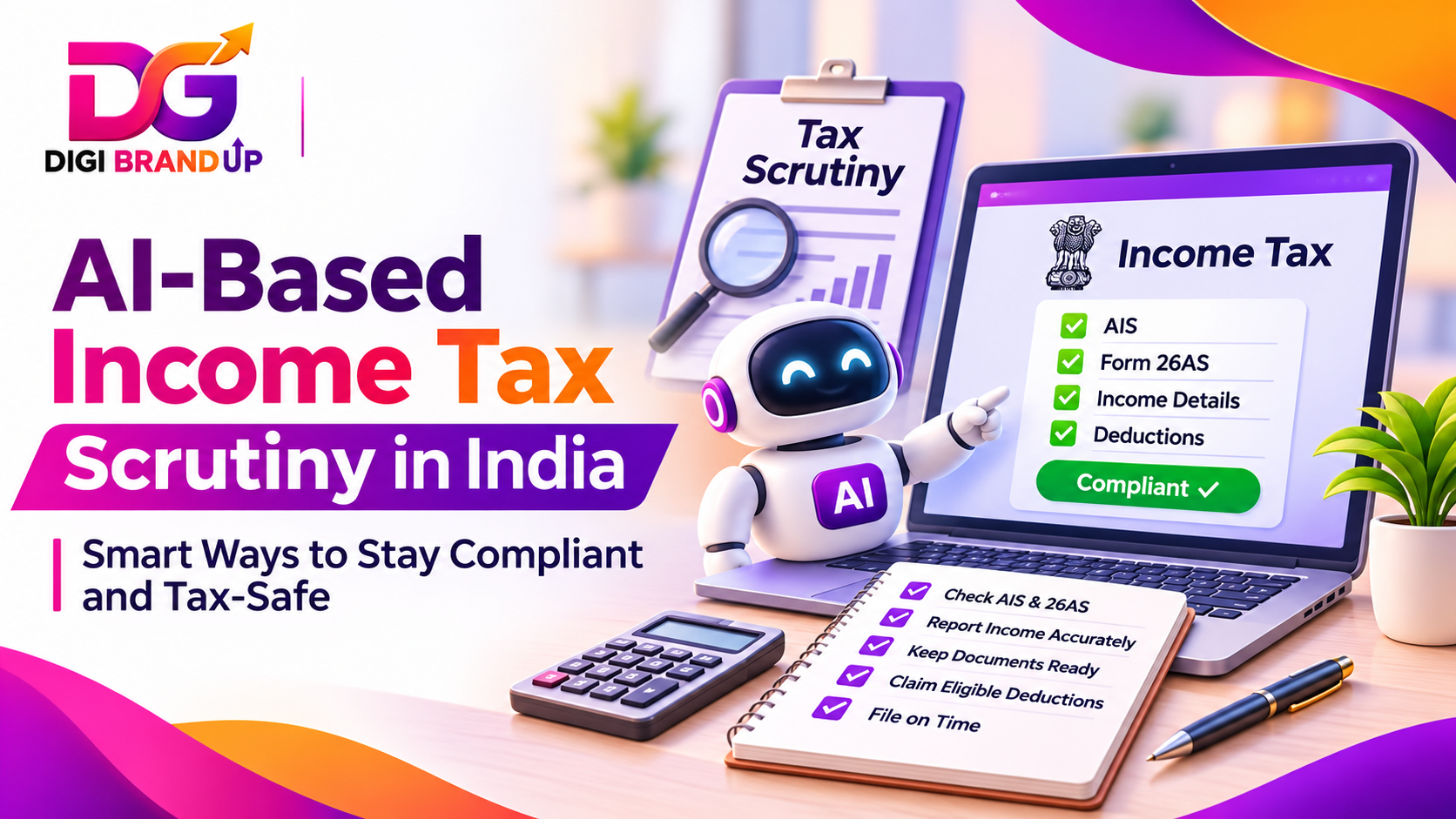
AI-Based Income Tax Scrutiny in India: Smart Ways to Stay Compliant and Tax-Safe
Tax scrutiny has always been a concern for taxpayers in India. But with the growing use of technology in tax administration, the way tax authorities identify unusual or inconsistent tax information is changing. AI-Based Income Tax Scrutiny is becoming an important part of this technology-driven approach, helping authorities analyse large volumes of financial and tax data more efficiently.
For taxpayers, this does not necessarily mean that every return will be questioned. The bigger takeaway is that accurate reporting, proper documentation and timely compliance are becoming more important than ever.
This guide explains what AI-Based Income Tax Scrutiny means, how technology can identify potential inconsistencies, what may increase scrutiny risk, and what taxpayers can do to maintain a clean tax record.
What Is AI-Based Income Tax Scrutiny?
AI-Based Income Tax Scrutiny refers to the use of artificial intelligence, data analytics, automated systems and technology-assisted risk assessment in the tax administration process.
Instead of relying only on manual examination, tax systems can analyse information from different sources and identify patterns or inconsistencies that may require further examination.
For example, the information reported in an income tax return may be compared with information available through sources such as:
- Form 26AS
- Annual Information Statement (AIS)
- Tax Deducted at Source (TDS) records
- Tax Collected at Source (TCS)
- Financial transactions
- Reported income and deductions
- Other information available to the tax department
The purpose of such systems is primarily to improve efficiency, identify discrepancies and focus attention where additional verification may be required.
Why Is AI Being Used in Income Tax Administration?
India has millions of taxpayers and a huge volume of financial information is generated every year. Manually checking every transaction or tax return would be extremely inefficient.
Technology allows tax authorities to process large datasets much faster.
AI and data analytics can help with:
- Identifying unusual transaction patterns
- Comparing reported information with available records
- Detecting possible inconsistencies
- Prioritising cases for verification
- Improving tax administration efficiency
- Reducing dependence on completely manual processes
For taxpayers, this means that consistency between different financial records is increasingly important.
How Does AI-Based Income Tax Scrutiny Work?
The exact internal algorithms and risk-selection mechanisms used by tax authorities are not publicly disclosed in full. Therefore, taxpayers should be cautious about websites or individuals claiming to know a specific “AI scrutiny score” or secret formula.
At a broad level, technology-assisted tax administration can involve several stages.
1. Collection of Tax Information
Tax authorities receive financial information through various reporting mechanisms.
This may include income, TDS, TCS, certain financial transactions and other information reported by taxpayers or reporting entities.
2. Data Matching
The information provided in an income tax return can be compared with other available records.
For example, if a taxpayer reports salary income that does not appear consistent with the TDS information available in their records, the difference may need to be examined.
3. Risk Identification
Automated analytical systems can identify cases that contain unusual patterns or inconsistencies.
This does not automatically mean that the taxpayer has done something wrong.
A mismatch can occur because of:
- Incorrect reporting
- Timing differences
- Duplicate information
- Data-entry mistakes
- Incorrectly claimed deductions
- Information updated at different times
4. Verification or Further Action
Where necessary, the taxpayer may receive communication from the Income Tax Department asking for clarification, information or supporting documents.
This is why taxpayers should not panic simply because they receive a tax-related communication. The correct response is to understand the notice and respond within the applicable deadline.
AI-Based Income Tax Scrutiny in India: Smart Ways to Stay Compliant and Tax-Safe
Tax scrutiny in India is becoming increasingly technology-driven. With the growing use of data analytics and automated systems, the Income Tax Department can analyse large volumes of financial information more efficiently. AI-Based Income Tax Scrutiny is part of this broader shift toward technology-assisted tax administration.
For taxpayers, the practical lesson is simple: accurate reporting, proper documentation and timely compliance are more important than ever. Understanding how AI-Based Income Tax Scrutiny works can help taxpayers maintain better records and handle tax-related communications with greater confidence.
What Is AI-Based Income Tax Scrutiny?
AI-Based Income Tax Scrutiny refers broadly to the use of artificial intelligence, data analytics and automated technology to analyse tax and financial information and identify inconsistencies or cases that may require further examination.
Information reported in an income tax return may be compared with other available records, including the Annual Information Statement (AIS), Form 26AS, TDS records and other reported financial information.
Taxpayers can review their AIS through the official Income Tax Department portal.
How Does AI-Based Income Tax Scrutiny Work?
Technology-assisted tax administration can analyse information from different sources and identify unusual patterns or inconsistencies.
The process may broadly involve:
- Collection of financial and tax information
- Matching information from different sources
- Identification of possible discrepancies
- Risk-based analysis
- Verification or further communication where required
A mismatch does not automatically mean that a taxpayer has violated tax rules. Differences can sometimes occur because of reporting errors, timing differences or incorrect information submitted by a reporting entity.
Why Should Taxpayers Check AIS and Form 26AS?
Before filing an Income Tax Return, taxpayers should review the information available in their tax records. Checking AIS and Form 26AS can help identify possible differences before they become a bigger compliance issue.
Taxpayers should compare relevant information such as:
- Salary and other income
- TDS and TCS
- Bank interest
- Investment-related information
- Capital gains
- Reported financial transactions
For official information about income-tax filing and related services, taxpayers should use the Income Tax Department’s e-Filing Portal.
How Taxpayers Can Stay Compliant
The best way to deal with AI-Based Income Tax Scrutiny is not to try to avoid automated systems. Instead, taxpayers should maintain accurate and consistent financial records.
1. Review AIS Before Filing
Check your Annual Information Statement and compare the information with your own financial records. If you find incorrect information, use the appropriate feedback or correction facility available through the Income Tax Department.
2. Reconcile Form 26AS
Compare your TDS and TCS information with Form 16, salary records, bank statements and other relevant documents.
3. Report Income Accurately
Make sure taxable income is properly reported. This can include salary, interest income, rental income, capital gains, freelance income and other applicable sources.
4. Maintain Supporting Documents
Keep important documents related to income, investments, deductions, property transactions, business activities and other major financial transactions.
5. Claim Only Eligible Deductions
Tax deductions and exemptions should be claimed only when you meet the applicable legal conditions and have appropriate supporting records.
For taxpayers or businesses looking for professional assistance with financial and tax-related compliance, consider using professional tax and compliance services from a qualified service provider.
6. File Your Return on Time
Timely filing helps avoid unnecessary late fees, interest and other potential complications.
7. Respond to Tax Communications Promptly
If you receive an income tax notice or other official communication, read it carefully and respond within the applicable deadline.
The Income Tax Department provides an online e-Proceedings facility for eligible tax-related communications. You can access the official Income Tax e-Proceedings service to view and respond to applicable proceedings.
What If You Receive an Income Tax Notice?
Receiving a tax notice does not automatically mean that you have committed a tax violation. The notice should be reviewed carefully to understand the reason for the communication and the action required.
Start by checking:
- Assessment year
- Notice or communication type
- Issue mentioned in the communication
- Required documents
- Response deadline
- Applicable response procedure
If the matter is complex, professional tax consultation services can help you understand the issue and prepare an appropriate response.
Common Mistakes Taxpayers Should Avoid
Taxpayers should avoid:
- Ignoring AIS discrepancies
- Not checking Form 26AS
- Forgetting interest income
- Incorrectly reporting capital gains
- Claiming deductions without eligibility
- Maintaining incomplete financial records
- Ignoring genuine tax communications
- Waiting until the last day to respond to a notice
Accurate records and timely compliance can make the tax process considerably easier.
How Businesses Can Prepare for AI-Based Income Tax Scrutiny
Businesses and professionals should maintain organised financial records throughout the year rather than trying to reconstruct everything at the time of filing.
Good compliance practices include:
- Regular bookkeeping
- Bank reconciliation
- Accurate invoices
- TDS reconciliation
- GST reconciliation where applicable
- Proper expense documentation
- Income reconciliation
- Timely tax filings
Businesses can also explore professional tax and compliance support to improve their financial record-keeping and compliance processes.
Benefits of Technology-Driven Tax Administration
Technology can provide several benefits to taxpayers and tax authorities.
It can help process large amounts of information, identify possible inconsistencies and improve the efficiency of tax administration.
For genuine taxpayers, better digital records can also make it easier to identify and correct discrepancies before they become serious compliance issues.
Final Thoughts
AI-Based Income Tax Scrutiny is part of India’s broader move toward technology-driven tax administration. Taxpayers do not need to fear technology, but they do need to take accuracy and compliance seriously.
Review your AIS and Form 26AS, report income correctly, claim only eligible deductions, maintain supporting documents and respond to official communications within the required timelines. Consistent financial records and timely compliance can help taxpayers manage their tax responsibilities with greater confidence.
For businesses and individuals seeking help with tax-related compliance, professional tax and compliance services can provide additional support in maintaining accurate records and handling complex tax matters.
How Taxpayers Can Stay Compliant
The best response to AI-Based Income Tax Scrutiny is not to try to “beat the AI.” That is a remarkably bad tax strategy.
Instead, taxpayers should focus on accurate reporting and proper documentation.
1. Check AIS Before Filing Your Return
The Annual Information Statement can contain important information related to financial transactions and income.
Before submitting your ITR, review the information available to you and identify discrepancies.
If information appears incorrect, taxpayers should follow the appropriate process for providing feedback or correction.
2. Reconcile Form 26AS
Form 26AS contains important tax-related information, particularly regarding TDS and TCS.
Compare the figures with your salary slips, interest certificates, Form 16 and other relevant documents.
3. Report Income Accurately
Do not leave out income simply because it seems small or because you believe the tax impact is insignificant.
Interest income, rental income, capital gains, freelance income and other taxable income should be reported according to the applicable tax rules.
4. Keep Supporting Documents
Maintain relevant records for:
- Salary income
- Bank interest
- Investments
- Capital gains
- Property transactions
- Business income
- Deduction claims
- Donations
- Loans
- Major financial transactions
Not every document needs to be submitted with the return, but maintaining proper records can become extremely useful if clarification is required later.
5. Avoid Unreasonable Tax Claims
Tax planning is legal. Fabricating expenses, fake deductions or incorrect information is an entirely different matter.
A taxpayer should claim benefits only when they genuinely satisfy the applicable conditions.
6. File Your Return on Time
Late filing can create unnecessary complications and may result in interest, late fees or other consequences depending on the circumstances.
Timely filing is one of the simplest parts of tax compliance, yet humans have somehow managed to make it a recurring annual emergency.
7. Respond to Tax Communications Promptly
If you receive a notice or communication from the Income Tax Department, read it carefully.
Check:
- The type of communication
- The relevant assessment year
- The issue mentioned
- The response deadline
- Documents or information requested
- The appropriate response mechanism
Ignoring a genuine tax communication can make a manageable issue much more complicated.
AI-Based Scrutiny Does Not Mean Every Taxpayer Is Under Investigation
This distinction is important.
AI-Based Income Tax Scrutiny does not mean that artificial intelligence independently declares a taxpayer guilty of tax evasion.
Technology can assist with analysing information and identifying cases that may require attention. Further verification, communication and legal proceedings, where applicable, operate within the tax administration framework.
A data mismatch can have a perfectly legitimate explanation.
For example, a transaction may appear differently across systems because of timing differences or reporting errors. The taxpayer’s responsibility is to identify such discrepancies and maintain appropriate records.
Related Services from DigiBrandUp
Tax compliance is an important part of managing your business finances. If you need professional support with tax and compliance services, business accounting, or other financial requirements, explore the relevant services available on DigiBrandUp.
You can also learn more about DigiBrandUp’s business services to understand how professional support can help your business manage its digital and operational needs efficiently.
What Should You Do If You Receive an Income Tax Notice?
Do not immediately assume that a notice means you are in serious trouble.
First, verify the communication through the official Income Tax Department’s systems and understand what type of notice or communication you have received.
Then:
- Read the notice carefully.
- Identify the assessment year.
- Understand the specific issue.
- Compare the notice with your ITR and tax records.
- Collect relevant supporting documents.
- Submit the required response within the prescribed timeline.
- Consult a qualified tax professional if the matter is complicated.
The most dangerous response is simply ignoring the notice because you hope the problem will disappear. Tax administration is unfortunately not a horror movie where closing your eyes makes the monster leave.
Benefits of Technology-Driven Tax Administration
The use of technology can also provide advantages to genuine taxpayers.
Faster Data Processing
Large amounts of information can be analysed much faster than through completely manual processes.
Better Detection of Errors
Automated comparison can help identify inconsistencies that may otherwise remain unnoticed.
Improved Compliance
When taxpayers know that financial information can be cross-checked, there is a stronger incentive to maintain accurate records.
More Efficient Tax Administration
Technology can help authorities focus resources on cases requiring greater attention rather than manually examining every return in the same way.
Common Mistakes Taxpayers Should Avoid
If you want to reduce unnecessary tax complications, avoid these common mistakes:
- Filing returns without checking AIS
- Ignoring Form 26AS differences
- Forgetting interest income
- Reporting incorrect capital gains
- Claiming deductions without eligibility
- Maintaining poor financial records
- Entering incorrect bank or personal information
- Ignoring tax communications
- Waiting until the last moment to respond to notices
- Relying on random social-media tax advice
Tax rules can change, and individual circumstances matter. For complicated matters, professional advice is safer than copying a five-minute internet hack designed by someone whose tax expertise appears to consist of owning a ring light.
How Businesses Can Stay Prepared
Businesses and professionals should take compliance even more seriously because their financial activities can involve multiple sources of income, expenses, invoices, payments and reporting obligations.
A good compliance system should include:
- Proper bookkeeping
- Regular bank reconciliation
- Accurate invoice records
- TDS reconciliation
- GST reconciliation where applicable
- Income reconciliation
- Proper documentation of expenses
- Timely tax filings
- Periodic review of financial records
Regular reconciliation is much better than discovering a major mismatch when a deadline is already breathing down your neck.
Future of AI-Based Income Tax Scrutiny in India
Technology is likely to continue playing an important role in India’s tax administration.
As digital financial records expand, automated analytics can potentially help authorities process information more efficiently and identify inconsistencies at scale.
For taxpayers, the practical lesson is simple: digital financial activity requires digital-level accuracy in tax reporting.
Maintaining consistent records across bank accounts, invoices, investment statements, TDS records, AIS, Form 26AS and income tax returns can make tax compliance considerably easier.
Final Thoughts
AI-Based Income Tax Scrutiny represents a broader shift toward technology-driven tax administration in India. The goal for taxpayers should not be to figure out how to avoid automated systems, but to make sure their financial information is accurate, explainable and properly documented.
Review your AIS and Form 26AS, report taxable income correctly, claim legitimate deductions, maintain supporting documents and respond to official communications within the required timelines.
Good tax compliance is no longer just about filing an ITR. It is about maintaining consistency across your financial records.
Frequently Asked Questions
What is AI-Based Income Tax Scrutiny?
It refers broadly to the use of artificial intelligence, data analytics and automated technology to analyse tax and financial information and identify inconsistencies or cases that may require further examination.
Does AI-Based Income Tax Scrutiny mean I have committed a tax violation?
No. A mismatch or risk indicator does not automatically establish wrongdoing. Legitimate discrepancies can occur because of reporting errors, timing differences or other reasons.
Can AIS help taxpayers avoid tax problems?
AIS can help taxpayers review information available to the tax department and identify potential discrepancies before filing or responding to tax communications.
What should I do if my AIS contains incorrect information?
Review the transaction carefully and use the appropriate feedback or correction mechanism available through the Income Tax Department’s systems. Keep supporting documents for your records.
How can I stay safe from tax scrutiny?
There is no guaranteed method to avoid scrutiny. The sensible approach is accurate income reporting, legitimate deduction claims, proper documentation, timely filing and timely responses to official communications.
Is AI replacing tax professionals?
Technology can automate data analysis and routine processes, but complex tax matters can still require professional interpretation, especially when legal, financial or factual issues are involved.
Conclusion
AI-Based Income Tax Scrutiny is making tax compliance more data-driven in India, but taxpayers do not need to fear technology. The smartest approach is to keep your financial records accurate, reconcile AIS and Form 26AS, report income correctly, claim only eligible deductions, and respond to tax communications on time. Staying organised and transparent can help you handle tax scrutiny with greater confidence and avoid unnecessary complications.