


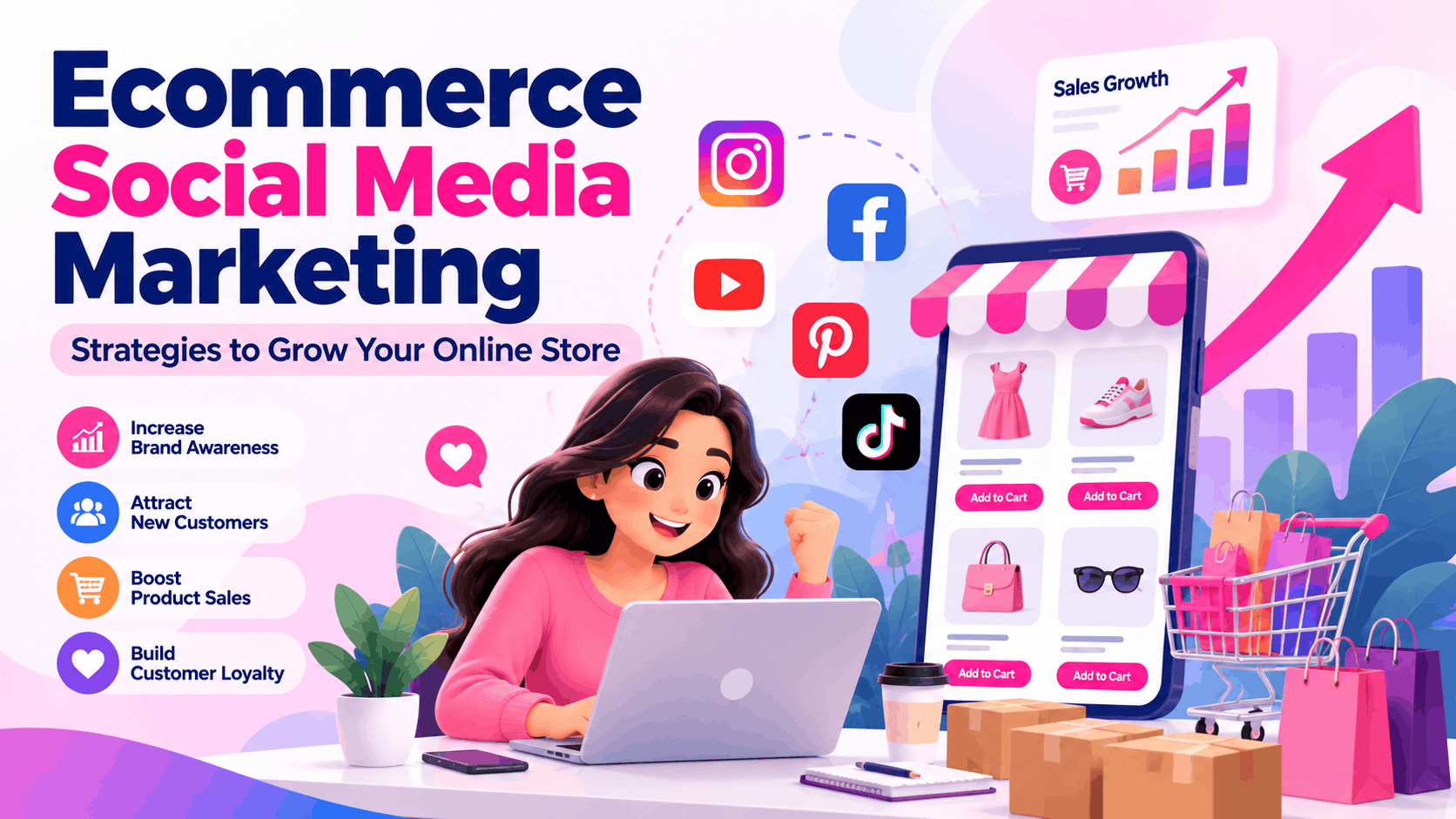
Grow Online Store: Proven Ecommerce Social Media Marketing Strategies
Running an online store is not just about uploading products and waiting for customers to arrive. You need to reach the right audience, build trust, present your products clearly, and give people a reason to buy from you instead of another seller. This is where ecommerce social media marketing becomes useful. Platforms such as Instagram, Facebook, Pinterest, and YouTube allow businesses to showcase products, answer customer questions, share useful content, and attract potential buyers. If your goal is to grow online store sales, social media can help you introduce your brand to new customers and stay connected with people who have already purchased from you. However, posting product pictures every day is not a complete marketing strategy. You need a clear plan that combines engaging content, targeted advertising, customer feedback, and regular performance tracking. Whether you sell clothing, beauty products, electronics, home accessories, or handmade items, your strategy should match your audience and product category. Businesses that want to improve their online selling process can explore DigiBrandUp for digital services and ecommerce solutions. The right approach to grow online store sales begins with understanding your customers, choosing the right social platforms, and creating content that makes shopping easier. In this guide, you will learn practical ways to attract visitors, increase engagement, build customer confidence, and turn social media activity into measurable business results.
Why Ecommerce Social Media Marketing Helps You Grow Online Store Sales
Social media gives online businesses an opportunity to reach customers where they already spend time. Instead of relying entirely on search traffic or marketplace visibility, you can use product demonstrations, customer reviews, short videos, and helpful posts to introduce your products to a wider audience. A clothing brand, for example, can publish styling ideas, size guides, fabric close-ups, and outfit combinations. A home decor store can share room transformations and product placement ideas. These posts help customers understand how a product fits into their daily lives. To grow online store sales, focus on answering the questions customers usually ask before making a purchase. Explain product features, show realistic photographs, provide accurate prices, and make delivery and return policies easy to find. Social media engagement alone does not guarantee revenue, so connect your content strategy with a clear shopping journey. Every post should have a purpose, whether that is introducing a product, educating customers, building trust, or encouraging a visit to your website.
Choose the Right Social Media Platforms to Grow Online Store
Not every social media platform is suitable for every online business. Instagram can be useful for visually appealing products, fashion, beauty, lifestyle items, and short product demonstrations. Facebook can help businesses connect with communities, run advertising campaigns, and communicate with customers. Pinterest may be valuable for products associated with home decor, fashion inspiration, crafts, and planning. YouTube can support detailed product demonstrations, tutorials, comparisons, and buying guides. Before trying to grow online store sales across multiple platforms, identify where your target customers spend their time and what kind of content they prefer. Start with one or two platforms that suit your products and available resources. Publish consistently, study engagement and website visits, and expand only when you can maintain content quality. Creating accounts everywhere without a clear plan can spread your time and budget too thin.
Create Product Content That Helps You Grow Online Store
Product content should help customers understand what they are buying. Clear images, short demonstrations, detailed descriptions, and practical examples can answer questions that ordinary promotional posts often leave unanswered. If you sell clothing, show the product from different angles and explain sizing, fabric, and care instructions. If you sell kitchen equipment, demonstrate how the product works and explain its main benefits. To grow online store sales, avoid relying exclusively on discount announcements and repeated product photographs. Mix product showcases with educational posts, buying tips, comparisons, styling suggestions, and answers to common customer questions. Use clear calls to action when appropriate, such as inviting visitors to view a collection or read the full product details. Make sure the linked landing page matches the content of the post. A customer who clicks an advertisement for a particular product should not have to search the entire website to find it.
Use Short Videos to Grow Online Store Reach
Short videos can show product details that still images cannot communicate as effectively. A brief demonstration can explain how an item works, how it looks when worn, or how it solves a common problem. You can create product unboxing videos, before-and-after demonstrations, styling tutorials, packaging clips, and answers to frequently asked questions. To grow online store visibility, keep videos focused on one clear idea rather than trying to explain everything in a single clip. Show the product early, use readable captions, and ensure the video makes sense without sound. Record genuine demonstrations and avoid exaggerated claims about product performance. You do not need expensive equipment to begin. Good lighting, clear audio, steady framing, and an honest presentation can be enough for many products. Track video views alongside website visits, add-to-cart activity, and purchases to understand which formats attract customers who are likely to buy.
Use Customer Reviews and User-Generated Content to Grow Online Store Trust
Customers often want reassurance before buying from an unfamiliar online store. Reviews, customer photographs, product demonstrations, and genuine testimonials can help answer concerns about quality, appearance, and usefulness. Ask buyers for honest feedback after their orders arrive and request permission before sharing their photographs or videos. To grow online store credibility, display authentic reviews and respond professionally to both positive and negative feedback. If a customer reports a problem, explain the steps being taken to resolve it rather than hiding the complaint or arguing publicly. Avoid buying fake reviews or presenting paid endorsements as independent recommendations. These practices can damage trust and may violate platform policies or applicable advertising rules. Real customer experiences provide useful information for future buyers and can also reveal areas where your products, descriptions, or delivery process need improvement.
Run Targeted Social Media Ads to Grow Online Store Revenue
Organic content can help build an audience, while paid advertising can give your products additional exposure to selected groups of potential customers. Advertising platforms offer targeting options based on factors such as location, interests, and previous interactions, subject to their current policies and available data. To grow online store revenue with paid campaigns, begin with a specific objective. You might want to generate product sales, attract qualified website visitors, or encourage people to enquire about a product. Choose a suitable campaign objective and send visitors to a relevant landing page. Test different creatives, product angles, headlines, and audiences rather than changing everything at once. Set a budget you can afford to test and monitor actual results. Useful measurements include cost per purchase, conversion rate, average order value, and return on advertising spend. A large number of clicks is not necessarily a good result if visitors leave without buying. Review campaign performance before increasing your budget.
Use Influencer Marketing to Grow Online Store Awareness
Creators can introduce your products to audiences who already follow their content. However, a large follower count does not automatically make someone the right partner for your business. Look for creators whose audience, content style, and subject matter match your products. A smaller creator with genuine engagement and a relevant audience may be more useful than a larger account with little connection to your target customers. To grow online store awareness through influencer marketing, agree on deliverables, payment, timelines, usage rights, and performance measurements before the campaign begins. Give creators accurate product information while allowing them to present their genuine experience. Sponsored content should be disclosed clearly in accordance with applicable rules and platform requirements. Use trackable links or campaign codes when suitable, and compare the results against your costs. Repeat partnerships that produce meaningful business outcomes rather than choosing creators based only on popularity.
Improve Your Product Pages to Grow Online Store Conversions
Social media can bring potential customers to your website, but the product page often determines whether they continue towards checkout. If a page loads slowly, has unclear photographs, or hides important information, visitors may leave even when the advertisement performs well. To grow online store conversions, provide accurate product titles, useful descriptions, clear pricing, delivery information, and a visible purchase button. Include product dimensions, available sizes, material details, and return information where relevant. Make sure the website works properly on mobile devices because many social media visitors browse through their phones. Reduce unnecessary checkout steps and make payment options easy to understand. You can also explore DigiBrandUp’s ecommerce services for support with your online selling strategy. A strong product page connects the promise made in your social media content with the actual buying experience.
Build a Content Calendar to Grow Online Store Consistently
Posting regularly becomes easier when you plan content in advance. A simple content calendar can include product demonstrations, customer reviews, educational posts, seasonal offers, behind-the-scenes content, and answers to common questions. Choose a realistic publishing schedule that your team can maintain. To grow online store engagement consistently, review which topics generate meaningful conversations, website visits, and purchases. Avoid publishing the same sales message every day because followers need useful information as well as promotional offers. Plan campaigns around relevant occasions, but make sure the products and discounts genuinely suit the event. Leave room for timely content when customers ask questions or a product becomes particularly relevant. A calendar helps you maintain consistency without making every post feel identical.
Track Social Media Results to Grow Online Store Profitably
Marketing decisions become more useful when you measure outcomes rather than relying on likes and follower counts alone. Track website sessions from social media, product-page visits, add-to-cart events, purchases, conversion rates, and advertising costs. Use analytics tools and properly configured tracking to understand which channels contribute to sales. To grow online store profitably, compare revenue with product costs, shipping, payment fees, discounts, returns, and advertising expenses. A campaign that generates many orders may still be unprofitable if the acquisition cost is too high. Review performance over a meaningful period because results can fluctuate due to seasonality, promotions, and changes in audience behaviour. You can also consult Meta’s business marketing resources for guidance on creating and measuring campaigns. When linking to this external resource in WordPress, add the nofollow relationship to the link as required for this blog.
Common Social Media Marketing Mistakes to Avoid When You Grow Online Store
One common mistake is focusing entirely on follower growth instead of customer needs. Another is copying competitors without considering whether their audience, pricing, and business model are similar to yours. Poor-quality images, misleading product claims, inconsistent branding, and unanswered customer messages can also reduce trust. To grow online store sales sustainably, avoid spending heavily on advertisements before checking your website, product pages, and checkout process. Do not assume that a viral post will automatically generate profit. Keep product information accurate, respond to customer concerns, and test new ideas with a manageable budget. Most importantly, give each marketing activity enough time and data to evaluate its performance. Consistent improvement is more useful than changing your entire strategy every few days.
Frequently Asked Questions About How to Grow Online Store
1. How to grow online store?
To grow online store sales, choose the right social platforms, publish useful product content, optimize product pages, collect genuine customer reviews, and test targeted advertisements. Measure purchases and profitability instead of focusing only on likes and followers.
2. How to grow your online store?
To grow your online store, understand your target customers, improve your website experience, promote products through short videos and educational posts, and make buying straightforward. Track conversion rates and customer acquisition costs to identify which activities deliver results.
3. How to grow your online clothing store?
To grow online clothing store sales, publish clear product photographs, styling videos, size guides, fabric details, and customer reviews. Use relevant creators and targeted campaigns, and provide accurate sizing, shipping, and return information to help customers purchase confidently.
4. How to grow an online store?
To grow an online store, build a reliable website, select suitable marketing channels, improve product descriptions, and use social media to attract relevant customers. Test promotions, monitor sales, and focus on repeat purchases as well as new customer acquisition.
5. How to grow my online store?
To grow my online store, I would start by identifying the best-selling products, understanding customer needs, improving product pages, and creating a consistent social media plan. I would then test a small advertising budget and invest more only when the results support it.
Conclusion: Grow Online Store Sales with a Clear Strategy
To grow online store sales, combine useful social media content, trustworthy product information, targeted advertising, and a smooth shopping experience. Measure real business results, listen to customer feedback, and improve your strategy consistently. A focused plan can help your store build trust, attract relevant buyers, and achieve sustainable growth.