


Income Tax Return (ITR) Filing in Varanasi: Complete Guide for All
ITR Filing in Varanasi: A Practical Guide for Taxpayers
Filing an Income Tax Return is an important part of managing your finances. Whether you work for a private company, run a shop, provide professional services, or earn money through freelancing, understanding your tax responsibilities can help you avoid unnecessary problems. ITR filing in Varanasi helps individuals and businesses report their income, claim eligible deductions, calculate their tax liability, and request a refund when excess tax has been paid.
Many taxpayers assume that an Income Tax Return is required only when their income crosses a particular limit. However, the requirement to file a return can depend on several factors, including income, specified financial transactions, foreign assets, and other conditions under the applicable tax rules. Therefore, checking your filing obligation is a sensible first step.
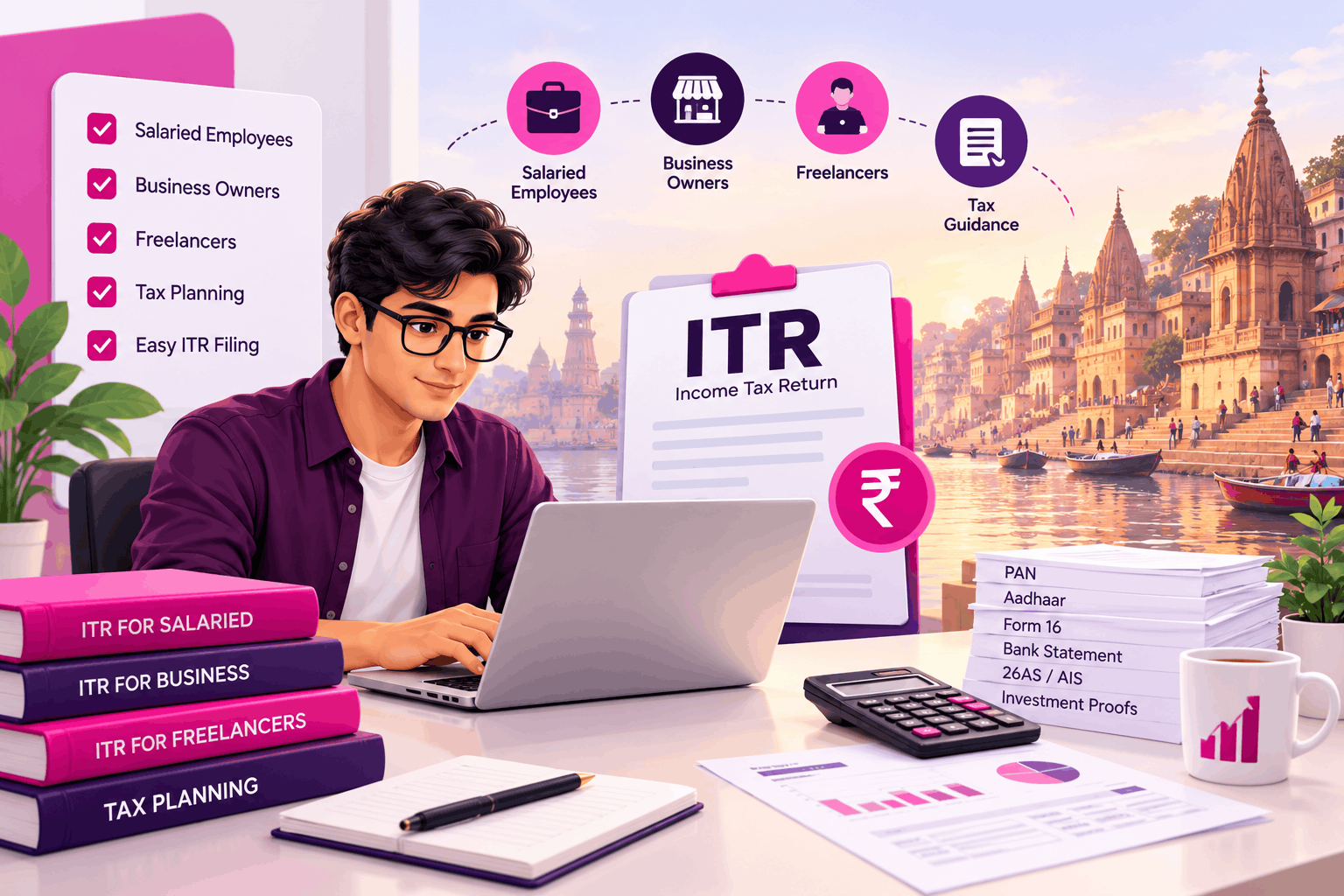
For salaried employees, ITR filing in Varanasi generally involves reviewing Form 16, salary details, bank interest, deductions, and tax deducted at source (TDS). Business owners may need to examine sales, expenses, profit and loss statements, and applicable tax records. Freelancers should maintain invoices, payment records, professional expenses, and information about TDS deducted by clients.
The process becomes easier when you collect the necessary documents before starting. Your PAN, Aadhaar, bank account details, Form 16, Annual Information Statement (AIS), Taxpayer Information Summary (TIS), and Form 26AS may all be relevant, depending on your circumstances. Checking these records can help identify missing income or differences between your documents and the information reported to the Income Tax Department.
Who Should Consider ITR Filing in Varanasi?
Different taxpayers have different filing requirements. Understanding your income source helps determine which return form and reporting method may apply.
Salaried employees: If you receive a salary, ITR filing in Varanasi can help you report your annual earnings, verify TDS, disclose other income, and claim eligible deductions under the applicable tax regime. Even when your employer deducts tax every month, you should check whether your final tax calculation matches your actual income.
Business owners: People running shops, agencies, trading businesses, or other commercial activities may need to report business income and maintain supporting records. The applicable ITR form depends on the business structure, income calculation method, and other eligibility conditions.
Freelancers and independent professionals: Designers, developers, consultants, content writers, and other independent professionals may receive payments from multiple clients. ITR filing in Varanasi helps them organise professional receipts, expenses, advance tax payments, and TDS information before submitting a return.
Other income earners: People earning rental income, bank interest, capital gains, or income from multiple sources may also need to file a return, depending on the applicable rules. Do not judge your filing requirement solely by your monthly salary.
Documents Required for ITR Filing in Varanasi
Before starting ITR filing in Varanasi, keep the following documents ready wherever they apply to your situation:
- PAN card and Aadhaar details.
- Form 16 for salaried employees.
- Bank statements and interest certificates.
- Form 26AS, AIS, and TIS.
- Salary slips and details of other income.
- Business income, expense records, invoices, and financial statements.
- Investment and deduction proofs, where applicable.
- Details of advance tax and TDS payments.
- Capital gains statements or rental income records, if relevant.
- Bank account details for receiving an eligible refund.
Not every taxpayer needs every document. For example, a salaried employee with no business income may have simpler reporting requirements than a freelancer earning from several clients. Proper documentation makes ITR filing in Varanasi more accurate and reduces the chance of missing important information.
How to Complete ITR Filing in Varanasi
The process usually begins with identifying the correct assessment year and checking the applicable return form. For income earned during the financial year 2025–26, the relevant assessment year is AY 2026–27.
Next, compare your income records with the information available in Form 26AS, AIS, and TIS. Review salary, business receipts, bank interest, capital gains, and other applicable income. Then determine which tax regime and deductions apply to your circumstances.
Once your details are ready, complete the return using the official e-filing portal or obtain professional assistance if your tax affairs are more complicated. Review the tax calculation carefully before submitting the return.
After submission, complete e-verification within the prescribed period. Filing the form without verifying it can leave the process incomplete. Keep the acknowledgement and supporting records for future reference.
For official instructions and filing facilities, visit the Income Tax Department e-Filing Portal. This is the primary source for checking applicable forms, filing instructions, and official announcements.
Common Mistakes to Avoid During ITR Filing in Varanasi
Small errors can create avoidable delays. One common mistake is reporting salary but overlooking bank interest, freelance receipts, rental income, or capital gains. Another is selecting an unsuitable ITR form or claiming deductions without checking eligibility.
Taxpayers should also avoid relying entirely on Form 16 because it may not include every source of income. Verify the available tax statements, check your bank account details, and ensure the selected assessment year is correct.
Missing the applicable due date can lead to late-filing consequences, interest, or other restrictions depending on the circumstances. Waiting for an extension announcement is not a reliable filing strategy. Complete your return as early as reasonably possible.
Professional Assistance for ITR Filing in Varanasi
Some taxpayers can complete a straightforward return themselves. However, professional assistance may be useful when income comes from several sources, business accounts need review, capital gains are involved, or previous returns contain errors.
DigiBrandUp provides an online point of contact for exploring business and professional services. Visit the DigiBrandUp homepage to learn more about the company. You can also explore its CA Services page for information relevant to tax and accounting support.
Before selecting any tax professional, check the scope of services, applicable fees, qualifications, and responsibility for reviewing your return. ITR filing in Varanasi should be based on accurate records and the tax rules applicable to your situation, rather than a one-size-fits-all approach.
Benefits of Timely ITR Filing in Varanasi
Filing your return on time can help you maintain organised financial records, claim eligible refunds, and provide income documentation when required for a loan, visa application, or other financial process. A filed return may be useful evidence of declared income, although acceptance depends on the institution and its requirements.
Regular ITR filing in Varanasi also helps business owners and freelancers maintain a clearer picture of their annual earnings. It can make financial planning easier and reduce the rush that often occurs close to the deadline.
The key is to report income honestly, check the applicable requirements, and retain your filing acknowledgement. A carefully prepared return is more useful than a rushed submission that needs correction later.
Frequently Asked Questions About ITR Filing in Varanasi
1. What is ITR filing?
ITR filing means submitting an Income Tax Return to report your income, applicable deductions, taxes paid, and tax liability for a financial year. ITR filing in Varanasi applies to eligible salaried employees, business owners, freelancers, and other taxpayers. The correct form depends on your income sources and eligibility. Timely ITR filing in Varanasi can also help you claim an eligible refund and maintain financial records.
2. What is the last date for ITR filing 2026?
The deadline depends on your taxpayer category and the applicable return form. For AY 2026–27, the original deadlines differ for non-audit and audit cases. Check the official Income Tax Department portal before relying on a date. Anyone planning ITR filing in Varanasi should confirm the deadline applicable to their circumstances.
3. Is ITR filing date extended?
Yes, a category-specific extension was announced on 28 September 2026. The deadline for specified audit-related taxpayers was extended from 31 October 2026 to 21 November 2026. This extension does not automatically apply to every taxpayer. Check the official notification before proceeding with ITR filing in Varanasi.
4. When ITR filing will start?
ITR filing generally begins after the relevant financial year ends and the required forms and utilities become available. For income earned during FY 2025–26, taxpayers file for AY 2026–27. ITR filing in Varanasi should begin once the appropriate form is available and the required income records are ready.
5. Any extension in ITR filing 2026?
Yes, an extension was announced for specified categories, but not every taxpayer received the same deadline. For accurate information about ITR filing in Varanasi, check the official Income Tax Department website. You can also visit DigiBrandUp to explore its services and find relevant professional support.
Conclusion
Timely ITR filing in Varanasi helps salaried employees, business owners, and freelancers manage their tax responsibilities with fewer complications. Keep your documents ready, verify your income details, and check the applicable deadline before submitting your return. For ITR filing in Varanasi, accurate reporting and proper verification matter more than rushing to meet the last date.